close

Know Before You Vote: Proposals 1 & 2

Two statewide proposals are on every Michigan ballot this November. Here’s what they do and how Michigan LCV recommends you vote.

On November 3, every Michigan voter will decide on two ballot proposals that shape who holds power in our state. Proposal 1 asks whether to open the entire state constitution to a rewrite by a constitutional convention. Proposal 2 would get corporate money out of Michigan politics.

Michigan LCV recommends voting NO on Proposal 1 and YES on Proposal 2. Both votes protect the same thing: a government that answers to Michigan voters, not to politicians and special interests.

Ballot proposals usually come at the end of the ballot, so remember to flip yours over and vote all the way down.
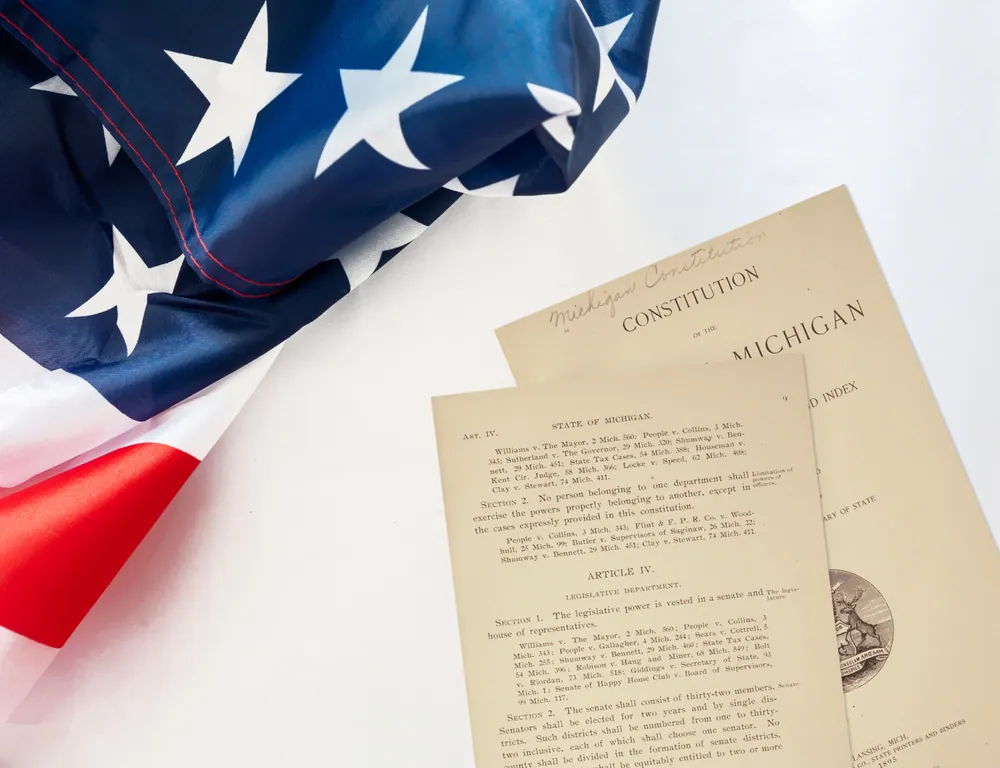
Vote No on Proposal 1

Keep Michigan Voters in Charge

Everyday Michiganders need to stay in control of the Michigan Constitution. It can’t be left to politicians with their own agendas and motives.

Proposal 1 is a statewide ballot question asking Michigan voters whether the state should hold a constitutional convention. A constitutional convention is a process in which elected delegates review the Michigan Constitution and may propose revisions or a new constitution.

A vote on Proposal 1 does not directly change the Michigan Constitution. Instead, it asks voters whether they want to begin the constitutional convention process explained in the previous section.

A YES vote

A Yes vote approves holding a constitutional convention. It does not amend the Michigan Constitution or immediately change any constitutional provisions. If Proposal 1 is approved:

  1. Michigan will hold a constitutional convention.
  2. Convention delegates will be elected by voters.
  3. Delegates will meet to consider possible constitutional revisions.
  4. Any proposed constitution or constitutional revisions must later be approved by Michigan voters before taking effect.

A NO vote

A No vote means Michigan will not hold a constitutional convention at this time. If Proposal 1 is not approved:

  1. No constitutional convention will be convened.
  2. The current Michigan Constitution will remain in effect.
  3. Constitutional amendments may still be proposed through the existing amendment processes.
  4. The constitutional convention question will appear again as required by the Michigan Constitution in 16 years.

Why vote NO on Proposal 1?

Michigan’s Constitution already provides established ways for citizens and elected officials to propose constitutional amendments. Those processes require public debate and ultimately allow Michigan voters to decide whether proposed amendments should be adopted.

Keep Michigan Voters in Charge

Michigan’s constitution works because voters have a voice. A Constitutional Convention would allow politicians and lobbyists in Lansing to take power away from the people of Michigan.

Politicians in Lansing could exploit a Constitutional Convention to lock out the voices of Michigan voters and rewrite the state constitution without accountability.

Con-Con delegates will write their own rules and agendas with little transparency or oversight from voters.

Special Interests Pose an Extreme Risk

A Con-Con lets delegates make sweeping changes to the entire state constitution.

There are no campaign finance rules for delegate races: no contribution limits, no disclosure requirements, no guardrails.

Wealthy donors and out-of-state interests could spend unlimited, untraceable amounts to elect delegates who would rewrite the constitution for their own agendas.

It’s Costly, and Michigan has said NO before

A Con-Con would cost Michigan taxpayers nearly $80 million.

Michigan voters have rejected a Con-Con by wide margins every time it has come to a vote.

A bipartisan coalition of more than 30 organizations, including groups that often disagree on policy, is urging a NO vote.

Why is this on the ballot?

Article XII, Section 3 of the state constitution requires that voters be asked every 16 years whether to hold a convention.

Michigan has had four constitutions: 1835, 1850, 1908, and the current one, adopted in 1963.

Michigan already has a proven process for targeted updates: citizens can propose and adopt amendments directly on the ballot.

Vote Yes on Proposal 2

Get Corporate Money Out of Michigan Politics

Michigan’s government should work for the people, not the corporations it regulates.

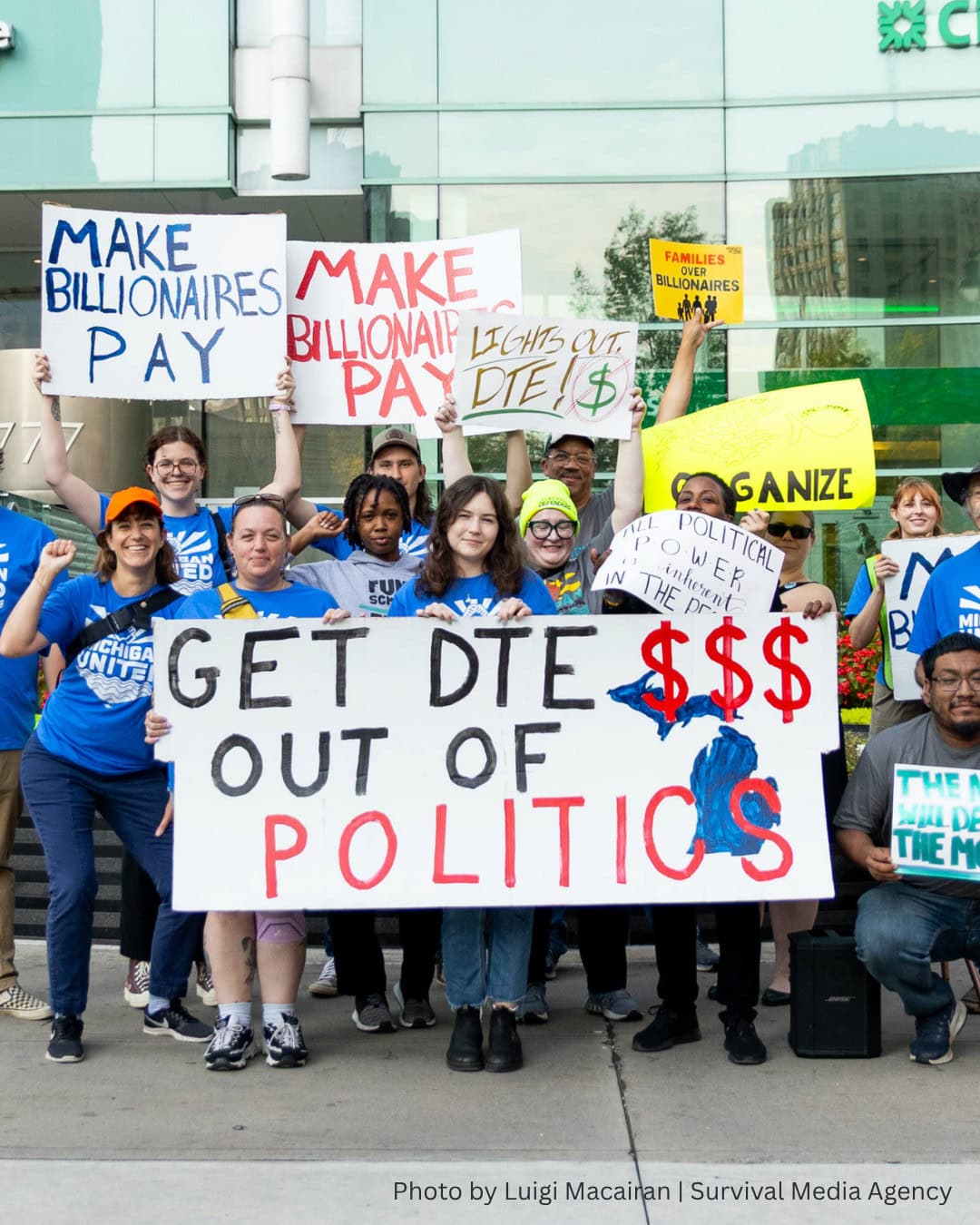
Proposal 2 would stop monopoly utilities and big government contractors from giving money to the state officials who regulate them and award their contracts.

Right now, monopoly utilities like DTE and Consumers Energy, and big government contractors like Blue Cross Blue Shield, can donate to the same politicians who regulate them and hand out their contracts. Proposal 2 closes that door and stops big donors from hiding who they are, so voters know who’s paying to influence Michigan’s elections. More than half a million Michiganders signed petitions to put Proposal 2 on the ballot. It passes with a simple majority vote.

Michigan’s democracy shouldn’t be for sale to the highest bidder. Here’s what Proposal 2 does and why Michigan LCV recommends voting YES.

A YES vote

A Yes vote approves new limits on campaign contributions and new disclosure requirements. Proposal 2 changes Michigan’s campaign finance law, not the state constitution. If Proposal 2 is approved:

  1. Regulated electric and gas utilities, their owners and top executives, and their affiliated groups could not contribute to candidates for governor, attorney general, or the state Legislature, to political party committees, or to members of the Michigan Public Service Commission.
  2. Businesses holding more than $250,000 a year in government contracts, and their owners and top executives, could not contribute to candidates in the state or local government that awarded the contract. This part takes effect 18 months after the law does.
  3. Groups spending $5,000 or more on ads that name a candidate in the months before an election would have to report that spending within 10 days.
  4. Online political ads would need “paid for by” disclaimers, and AI-generated robocalls would have to disclose that they are AI-generated.

A NO vote

A No vote means Michigan’s current campaign finance rules stay in place. If Proposal 2 is not approved:

  1. Regulated utilities and large government contractors could continue contributing to the officials who regulate them or award their contracts.
  2. Groups running ads that name candidates close to an election would not face the new reporting requirement.
  3. The new disclaimer requirements for online ads and AI-generated phone messages would not take effect.
  4. Changes to campaign finance law could still be made by the Legislature or through a future ballot proposal.

Why vote YES on Proposal 2?

Stops pay-to-play politics

Cracks down on a system where career politicians trade favors and government contracts for campaign cash from monopoly utility companies and big government contractors.

Gets money out of politics

Prohibits monopoly utilities, like DTE and Consumers Energy, from donating to the politicians who regulate them.

Prohibits big government contractors, like Blue Cross Blue Shield, from donating to the politicians who hand out their contracts.

Shines a light on dark money

Stops big donors from hiding who they are, so voters know who’s paying to influence Michigan’s elections.

Who put Proposal 2 on the ballot?

Michiganders for Money Out of Politics, a grassroots, nonpartisan campaign, collected more than half a million signatures from voters across the state.

Proposal 2 passes with a simple majority vote.

Join the movement to protect the Great Lakes state

And we’ll show you two ways to help. Together, we can be a voice for change and protect Michigan’s land, air, water, public health, and democracy.